
Bedtime Sunnahs
A rhyming picture book about the Sunnahs of bedtime, from wudu and the three Quls to lying on the right side, for children aged 4 to 9.
Start with a 7-day free trial.
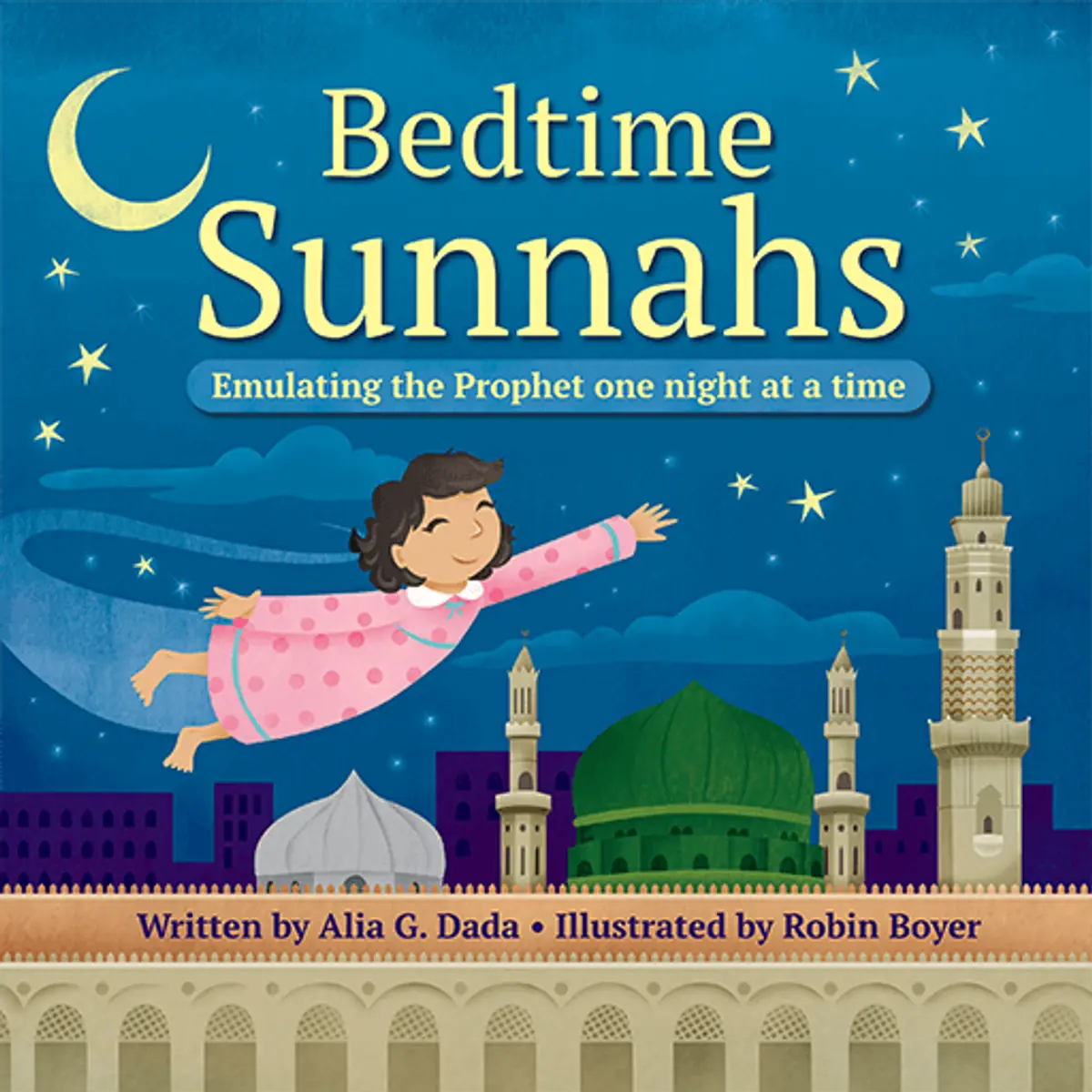
What is Bedtime Sunnahs about?
Bedtime Sunnahs is an Islamic picture book for children aged 4 to 9 that teaches, in rhyme, the things the Prophet Muhammad ﷺ did before he went to sleep, so children can follow his example one night at a time.
The book starts with a familiar routine: brush your teeth, make wudu, put your pyjamas on, hop into bed and read a book or two. But it is not time to sleep yet, because there are Sunnahs to keep. Children say their adhkar: Subhanallah 33 times, Alhamdulillah 33 times and Allahu Akbar 34 times, because praising Allah puts light in the heart. They recite the three Quls, the last three surahs of the Qur'an, which Muslims say morning and night for protection.
Then they raise their hands and make dua, asking Allah for everything they dream of, and for the people they love, the sick, the needy and the whole Ummah. Finally they say Bismillah, give hugs and kisses, and lie down on their right side, as the Prophet ﷺ taught.
Written by Alia G. Dada and illustrated by Robin Boyer, the book gives families a bedtime routine to share. The app's description says it also explains the Islamic words it uses, gives the hadiths behind each practice, and adds further practices for older readers and adults.
What your child will learn
- The Prophet Muhammad ﷺ had a bedtime routine that we can follow.
- Before sleeping, we can say Subhanallah, Alhamdulillah and Allahu Akbar.
- Reciting the three Quls at night asks Allah to protect us.
- We can make dua for the people we love and for everyone in need.
- The Prophet ﷺ taught us to make wudu before bed and lie on our right side.
The story of Bedtime Sunnahs
It was time to go night-night. First came the things every child knows: brush your teeth, make wudu, pyjamas on, then hop into bed and read a book or two. Time to sleep? No, wait: there were still some Sunnahs to keep.
Praising Allah puts light in the heart so that it shines. So the children said their adhkar: Alhamdulillah 33 times, Subhanallah 33 times and Allahu Akbar 34 times.
Next came the three Quls, the last three chapters of the Qur'an. The children recited them every day, morning and night, to keep all the bad things away.
Hands up, hands up: there was dua to make before they closed their eyes. They raised their hands up towards the skies and asked Allah for all that they dreamed of, not forgetting the people they loved, the sick, the needy and the entire Ummah. Ameen.
Then they said Bismillah before they laid down their heads, gave hugs and kisses to their loved ones, and turned towards the right, as our Prophet ﷺ said. And then they dozed off to sleep.
Find more stories about making dua, good manners and the Qur'an.
Where this story comes from
- Sahih al-Bukhari 247: When you go to bed, make wudu as you do for prayer, then lie down on your right side.
- Sahih al-Bukhari 5017: Every night when the Prophet ﷺ went to bed, he recited Al-Ikhlas, Al-Falaq and An-Nas into his cupped hands and wiped them over his body.
- Sahih al-Bukhari 3113 and 6318: The Prophet ﷺ told Ali and Fatimah to say Allahu Akbar 34 times, Subhanallah 33 times and Alhamdulillah 33 times when they went to bed.
Talk about it afterwards
- What do we do to get ready for bed before the Sunnahs begin?
- How many times do we say Subhanallah, Alhamdulillah and Allahu Akbar?
- Who would you like to make dua for tonight?
- Which side did the Prophet ﷺ lie on when he went to sleep?
Words to know
- Sunnah
- The way of the Prophet Muhammad ﷺ, what he said and did.
- Wudu
- The washing Muslims do before they pray.
- Adhkar
- Words of remembrance of Allah, said again and again.
- The three Quls
- The last three surahs of the Qur'an, Al-Ikhlas, Al-Falaq and An-Nas, which each begin with "Qul" (say).
- Ummah
- The worldwide community of Muslims.
Frequently asked questions
What age is Bedtime Sunnahs suitable for?
Children aged 4 to 9. It is short and rhymes, so it can become part of a bedtime routine, and older children can learn the hadiths behind each practice.
How long is Bedtime Sunnahs?
About 2 minutes to read aloud.
Is Bedtime Sunnahs based on hadith?
Yes. Each practice comes from what the Prophet Muhammad ﷺ did or taught before sleeping, such as making wudu, reciting the three Quls and lying on the right side, reported in Sahih al-Bukhari.
Who wrote Bedtime Sunnahs?
Alia G. Dada wrote it, and Robin Boyer illustrated it.