
How to Teach the Arabic Alphabet at Home (When You Can't Read It Yourself)
Give every letter a personality, let your child hear it first, and turn practice into play
10 min read Adiba Ataeva
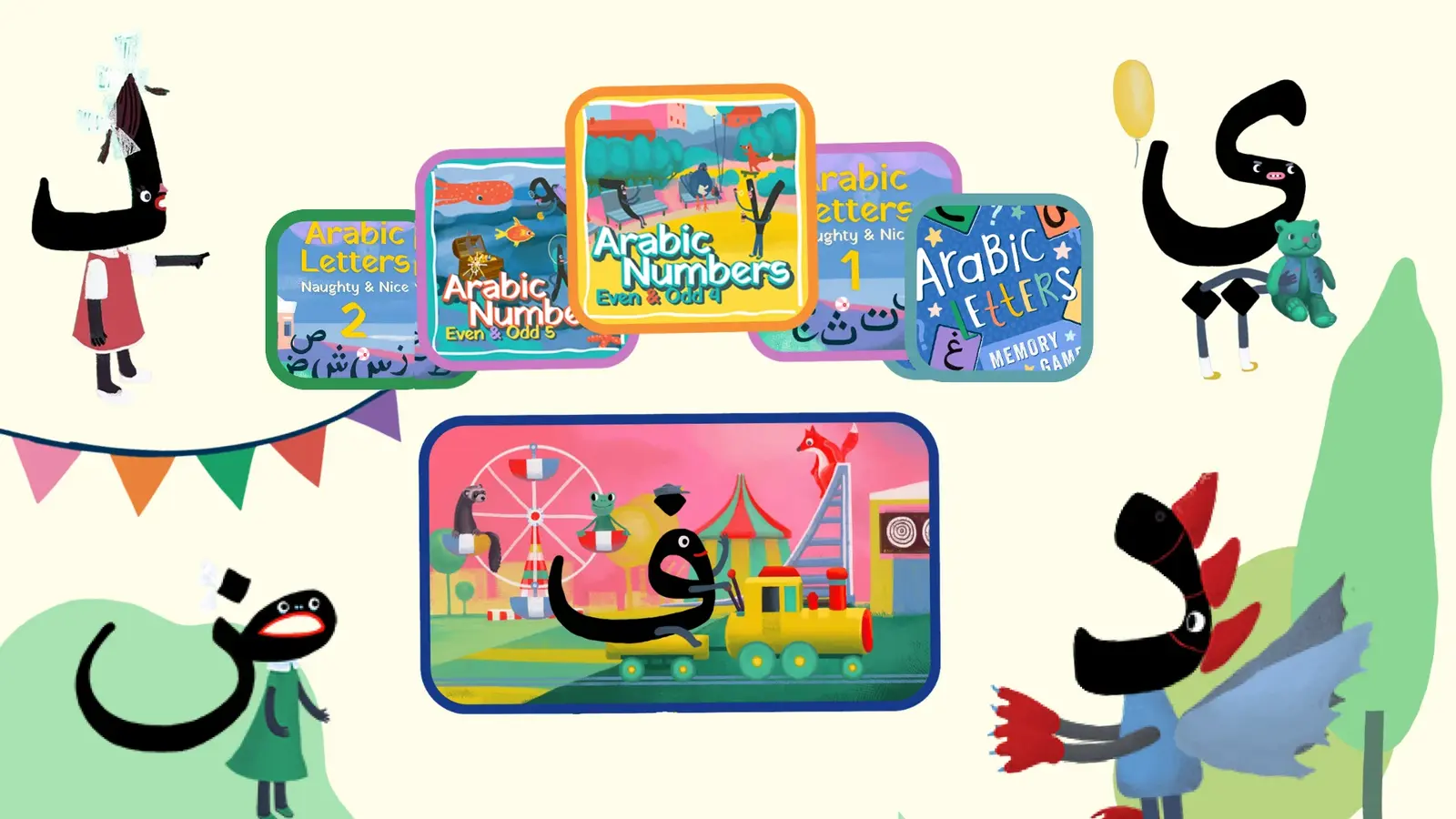
Summary
The best way to teach the Arabic alphabet so it sticks is to make every letter memorable. Give each one a personality, let your child hear it before they see it, and turn practice into play. Children don't remember shapes. They remember characters, stories and games.
Most families start with Arabic alphabet flashcards or tracing sheets and find the letters slipping away within weeks. Jihane al Husni, a mother in Ottawa, Canada, told Miraj Stories she knows the feeling well:
Teaching Arabic letters used to feel like a bit of a daily struggle.
Jihane al Husni, parent, Canada (@liliana.husni on Instagram)
When we built the Arabic letters in the Miraj Stories App, we started from that problem. Here's what we learned, and how to use it at home, with or without the app.
Why do children forget Arabic letters so quickly?
To a young child, a lot of Arabic letters look like the same curve with a different number of dots. A shape with nothing attached to it is hard to hold onto, however many times it's traced.
What children do hold onto is anything with a story. So the question isn't how to drill the letters harder. It's how to give each one something worth remembering.
How do you make Arabic letters memorable?
Give every letter a personality.
In Miraj, each letter is a character with its own life.
Alif is completely mad about football. But he's quite well-behaved compared to his mischief-making friend, the letter Taa. Haa (ح) turns up in a bobble hat and wellies, and Lam (ل) carries a lollipop. Children remember the character, and the letter comes along with it.
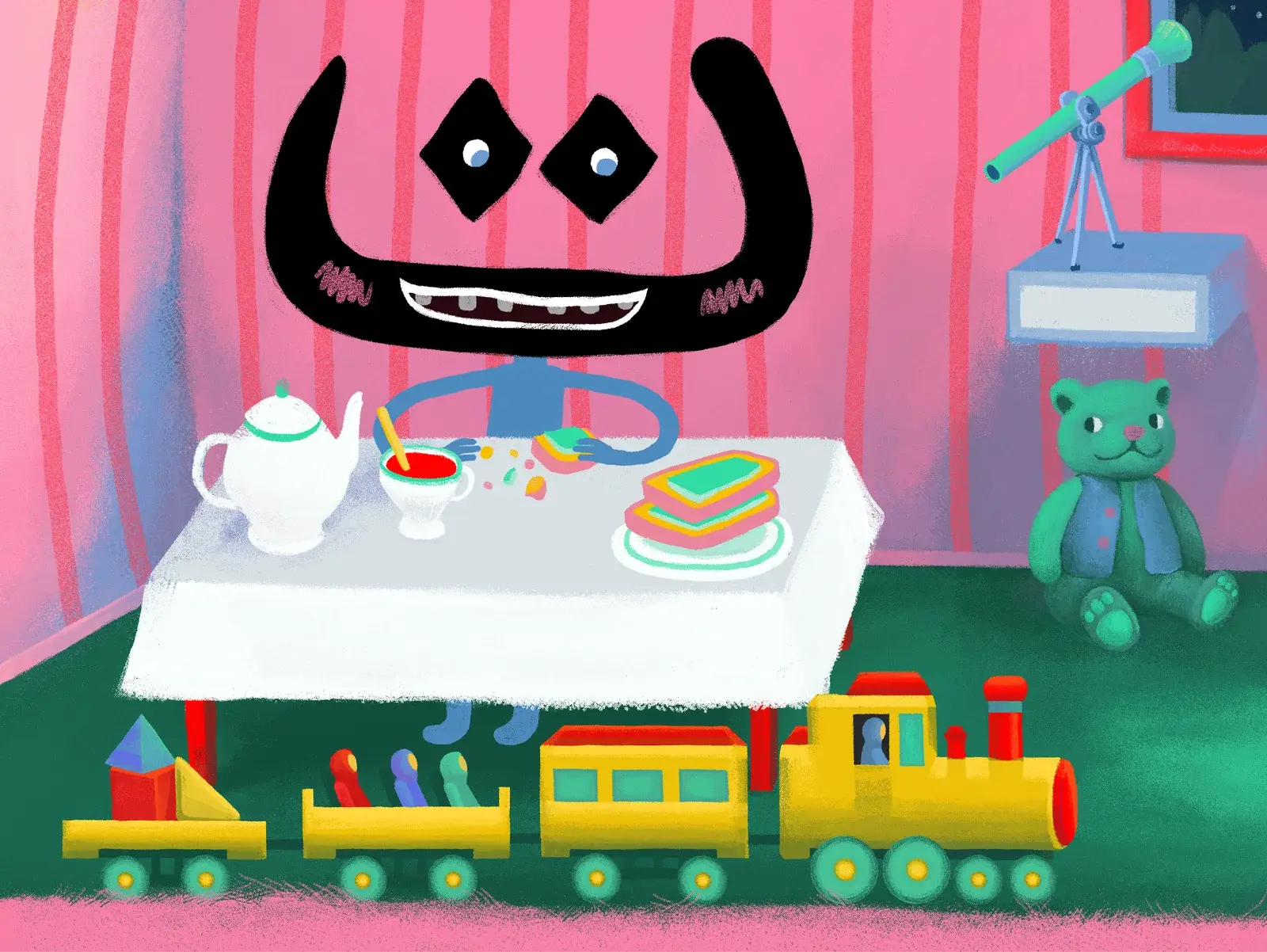
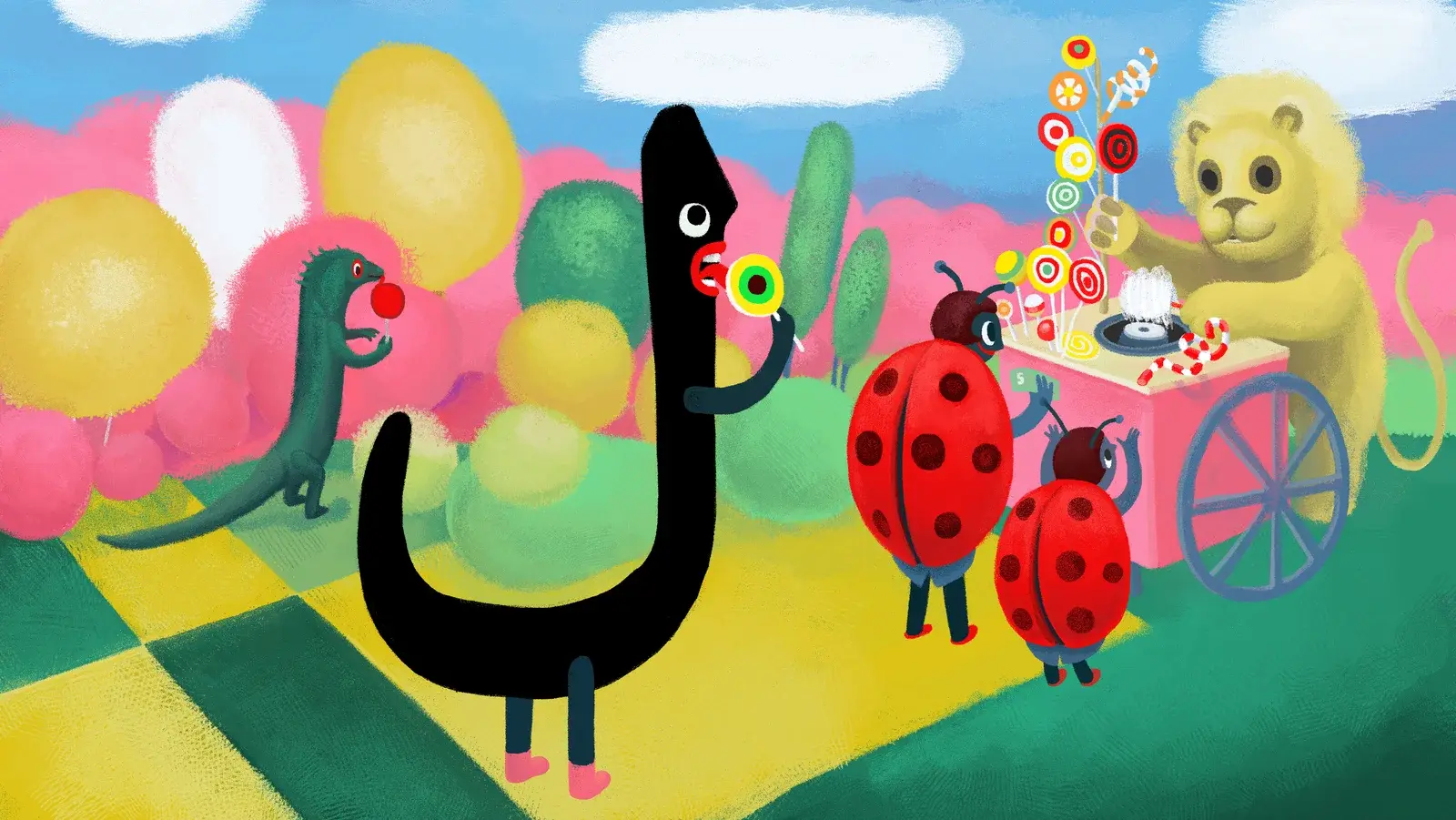
Arabic Letters, Naughty & Nice offers an entertaining first encounter with the Arabic alphabet through story, animation, and authentically pronounced audio narration.
Hudaibiya Dawood, a mum in the US, told Miraj Stories she's seen her daughter's confidence grow:
Miraj has made such a meaningful difference in my daughter's Arabic learning journey, helping her recognize and learn the Arabic letters with more confidence while keeping the experience fun and engaging.
Hudaibiya Dawood, parent, US (@cute.deen.doodles on Instagram)
You can do this at home too. Hold up a letter and ask your child what it looks like, or how it might be feeling today. Let them name it, draw it a face, and act it out. The sillier the story, the longer it lasts.
How do children learn Arabic letter sounds?
Tie the sound to something they can picture.
Jeem (ج) jumps in the gym.
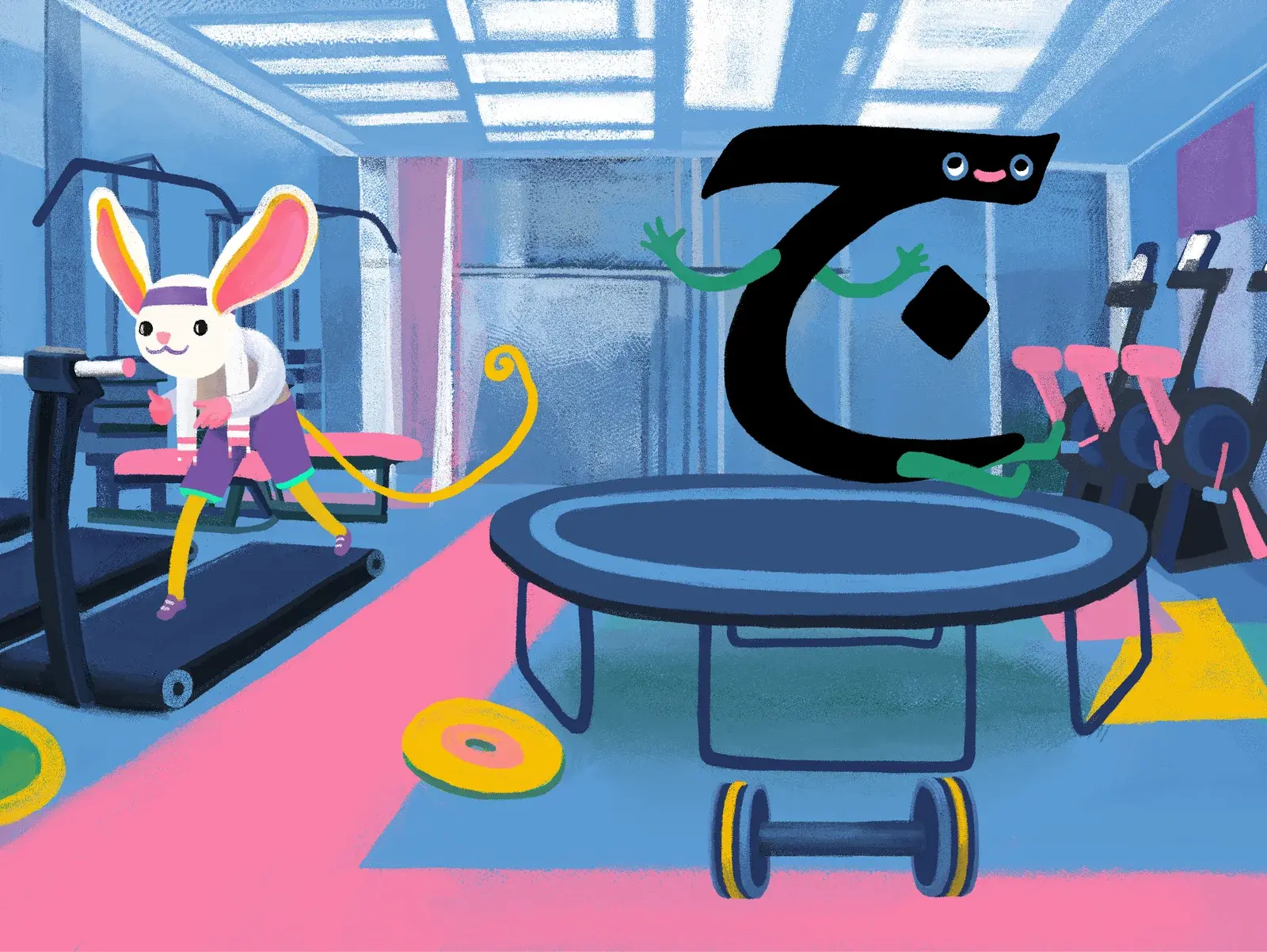
Jeem, jump and gym all start with the same sound as the letter. A child who remembers the scene remembers the sound without being told it.
The other half is pronunciation: hearing the letter said properly, again and again. Several Arabic letters, like ع and ق, make sounds that don't exist in English, and they're easy to get slightly wrong. In the Miraj App, every letter is voiced by Eman Al Hamwi, a native Arabic speaker and Qur'an and Arabic teacher based in the UK, so your child can copy the real sound rather than a best guess.
Here's Eman saying two of the trickiest letters, the letter's name first, then its sound:
Eman says the name of the letter Ayn (ع), then its sound
Eman says the name of the letter Qaf (ق), then its sound
Hearing it right matters most for parents still learning themselves. Lilia Darling, a mother of a 4-year-old in the UK, told Miraj Stories:
As a revert raising my little boy on my own, without community Islamic support, it is often difficult to learn Arabic.
Lilia Darling, parent, UK (@thetayyibgardener on Instagram)
If that sounds familiar, you don't need to model every sound yourself. Let your child hear it from a native speaker first, and say it alongside them rather than over them.
Which Arabic alphabet stories help the letters stick?
Some rules are easier to learn as a story. This is the best example.
Most Arabic letters are nice. They hold hands with the letters on both sides of them. But six letters are naughty: ا د ذ ر ز و. They'll hold hands with the letter before them, but refuse to hold hands with the letter after.
You might be surprised to learn that "naughty" letters are not our invention. They're actually a way many teachers explain joined writing, and you'll hear other names for it too, like kicking, stubborn or anti-social letters.
For instance, Mudarrisah Lisa, founder of Little Imtiyaz Centre in Singapore, which prepares young children for the Madrasah Entrance Tests, and a teacher since 2012, explains the term to parents by comparing the six letters to a naughty child:
The huruf [letters] refuse to make friends / hold hands with other huruf at times.
Mudarrisah Lisa, founder, Little Imtiyaz Centre, Singapore
In Miraj's Arabic Letters, Naughty and Nice touch books, the letters act this out in stories, with scenes where children explore alongside the characters.
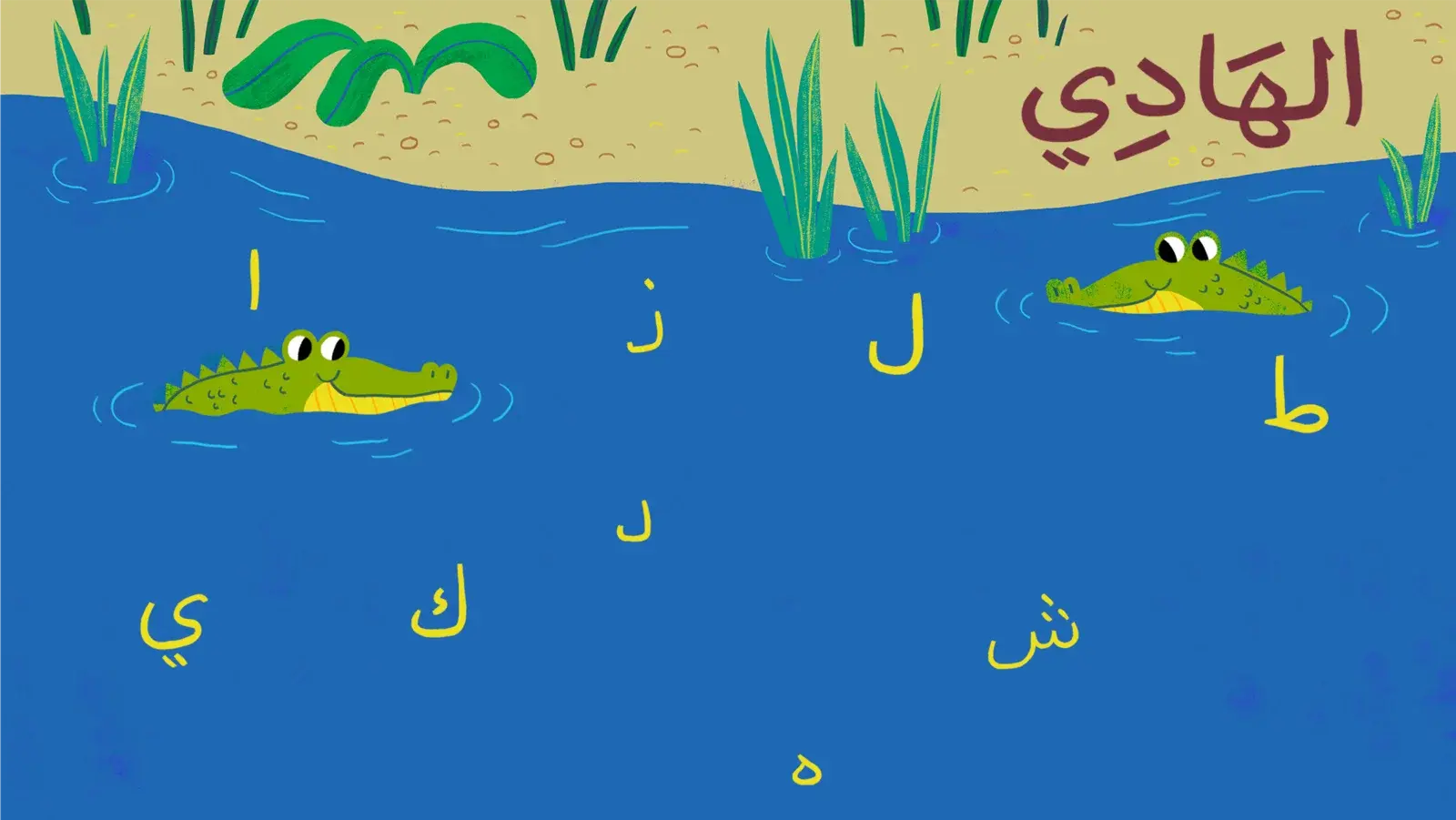
How do pictures help children learn Arabic?
Resources that provide children with visual cues can help them retain the letters. A picture gives a letter a second hook.
The best visual cues are things your child already knows. Linking ش to شمس (shams, sun), or أ to أسد (assad, lion), means your child has a word and an image to reach for when the letter alone won't come. A familiar object gives a new letter something solid to attach to, and the word teaches a little vocabulary along the way.
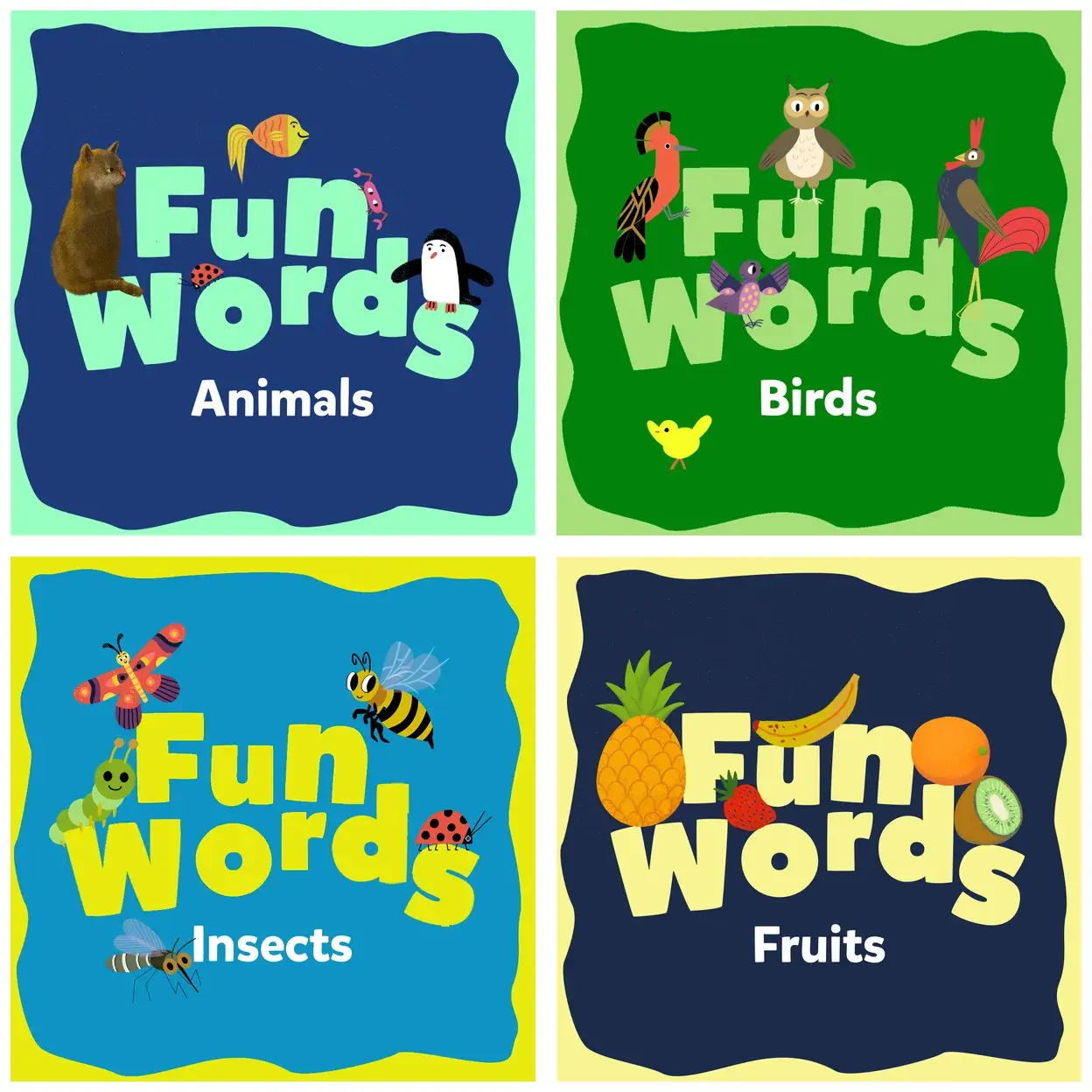
Miraj's Fun Words touch books are built around this. Each one pairs everyday pictures with their names in English, Arabic or both, so children can tap a lion or a ladybird, hear the word pronounced, and record themselves saying it. There are themed sets for animals, birds, insects, water creatures, toys, food and more.
Jihane saw the difference quickly:
Miraj turned it [learning Arabic] into playtime. The colorful visuals, engaging sounds, and bite-sized stories really helped the letters click naturally.
Jihane al Husni, parent, Canada (@liliana.husni on Instagram)
A few ways to use visuals at home:
- Stick a letter and its picture on the fridge, and swap it each week
- Ask your child to draw their own picture for a letter
- Use one colour for the dots, so look-alike letters stand out from each other
- Point out Arabic letters on packaging, signs and books around the house
How do you stop children mixing up look-alike letters?
Turn it into a game of spot-the-dot.
Baa (ب), Taa (ت) and Thaa (ث) share one shape. The only difference is one dot below, two above or three above. Teach them together and the dots become the point of the game rather than a detail children have to learn.
Tayba Kawthar, a home educator from the UK with three children, told Miraj Stories she grouped the letters this way from the start:
As a home-educating family with three children 5 years and under, I approached the Arabic Alphabet in a similar way as I did the English. We did not follow the traditional Qaida format, and instead, divided the letters into groups - single letters (e.g. ا, ي), doubles (ع, غ), and triples (ب, ت, ث).
Tayba Kawthar, parent and home educator, UK (@taybak on Instagram)
Learning letters in groups helps children understand the differences and similarities between them. Children taught letters one at a time often miss the dots, and in Arabic, the dots are the difference.
Try hiding one letter from a group around the room and asking your child to find the one with two dots. It takes a minute, and it's the kind of thing they'll ask to play again.
How do you make Arabic letter review fun?
Review is where letters actually stick, and it's the part most families skip because it feels like a test. It doesn't have to.
The trick is to get your child remembering letters without asking them to recite anything. Games do this naturally. A child trying to win is recalling letters the whole time, without noticing.
A few that need no preparation:
- Which one's missing? Lay out three letters, ask your child to close their eyes, and take one away
- Memory pairs. Make two cards for each letter, lay them face down, and take turns flipping two at a time
- Hide and seek. Hide a letter somewhere in the room and call out its name as a clue
Tayba found games made the difference with her three children:
We played games (including on the Miraj app!) and used hands-on activities. This helped set the foundation for us in a language that is not our mother-tongue.
Tayba Kawthar, parent and home educator, UK (@taybak on Instagram)
Games like the Arabic Letters Memory Game and the Arabic Letters Challenge in Miraj turn recall into play, so your child is practising without noticing.
Where it all comes together
Whatever you use, on paper or on a screen, look for the right amount of interaction rather than the most. A resource that asks your child to listen, tap and repeat keeps them thinking about the letter. One that flashes, beeps and rewards every tap keeps them thinking about the next tap. If your child is racing through without saying the sounds out loud, it's entertaining them rather than teaching them.
That balance is something we designed Miraj around, with calmer colours, slower animation and gentle sound, so the letter stays the focus.
Bilqis Abdul-Qaadir, a mum of two and an international motivational speaker, said about Miraj:
It's engaging, informative, and just interactive enough to keep their attention.
Bilqis Abdul-Qaadir (@BilqisAbdulQaadir on Instagram)
For Lilia, it went further than her son:
[As a revert...] Miraj is genuinely life changing. Not just for him but for me too.
Lilia Darling, parent, UK (@thetayyibgardener on Instagram)
However you begin, begin small: one letter, one character, one silly story. Once a letter has a personality, your child will want to meet the next one.
Key takeaways
- Children remember characters and stories far more easily than shapes
- Linking a letter to its sound through an action or picture gives it a second hook
- Letters should be heard from a native speaker before they're written
- Look-alike letters are easier to learn together, as a game
- Short, playful practice every day beats a long session once a week
Frequently asked questions about the Arabic alphabet
How many letters are in the Arabic alphabet?
There are 28. Some scholars count 29, treating the hamza (ء) as a separate letter. Arabic is read and written from right to left.
How do Arabic letters change at the beginning, middle and end of a word?
Arabic uses joined writing, so each letter can have up to four forms depending on where it sits in a word: on its own, at the start, in the middle or at the end.
How do you pronounce Arabic letters that English doesn't have?
The hardest Arabic letters are the ones with no English equivalent, especially ع, ح, خ, غ and ق, and the heavier letters ص, ض, ط and ظ. Hearing them from a native speaker is the most reliable way to learn them.
What is the Arabic alphabet order?
The standard alif, ba, ta order works well, because the alphabet already groups letters with similar shapes together. An Arabic alphabet chart on the wall helps children see the letters in order.
At what age should children start learning the Arabic alphabet?
Many children start between four and six. Before that, hearing the letter sounds is more useful than formal letter work.
Do I need to speak Arabic to teach my child the alphabet?
No. You need accurate audio and a consistent routine. The sounds can come from a native speaker, a teacher or an app, while you provide the structure and the fun.
Are Arabic alphabet worksheets worth using?
Yes, for handwriting and recognition. They can't teach sound, so use them after your child has heard and met the letter.
How long does it take to learn the Arabic alphabet?
It varies. At two letter groups a week, every letter is introduced in about two months. Recognising them reliably inside words takes longer.
What are the Arabic vowels?
Arabic has three short vowels, written as small marks above or below a letter: fatha (a), kasra (i) and damma (u). Long vowels are written with the letters ا, و and ي. Children usually learn the vowels once they know the letters.
What is a Noorani Qaida?
A Noorani Qaida is a beginner's primer used in many mosques and madrasahs to teach reading Qur'anic Arabic, starting with individual letters and building up to joined words. Many families use it alongside other methods, and some, like Tayba, choose a different route for younger children.
Explore the Miraj library
Explore the whole library
Adam & Hawwa
Audiobook · Ages 7-9 · 26 min

Juz by Juz: The Believer from Firawn's Family
Video · Ages 7-9 · 13 min

Juz by Juz: Nuh and His Sons
Video · Ages 4-9 · 17 min
Bilal & Mr. Shells
Story · Ages 4-9 · 5 min
Read more from Miraj for Grown-ups
Is YouTube Haram for Kids?
Is YouTube haram? What do scholars say? How app design affects children, and a 7-point framework to judge apps safe for children. Plus: screen-free alternatives for Muslim families.
Islamic Parenting in the West
What does Islamic parenting mean for Muslim families in the West? This guide covers tarbiyah, Quranic values, how strict to be, and what actually works.
How to Explain Hajj to Children
Wondering how to explain Hajj to your child? This guide covers age-appropriate explanations, the story of Ibrahim, and activities for home.