Tittle Tattle Talia
Talia loves to gossip, until her tales cost her every friend, in a picture book about the Prophet's ﷺ advice to speak good or stay silent, for ages 7 to 12.
Start with a 7-day free trial.
What is Tittle Tattle Talia about?
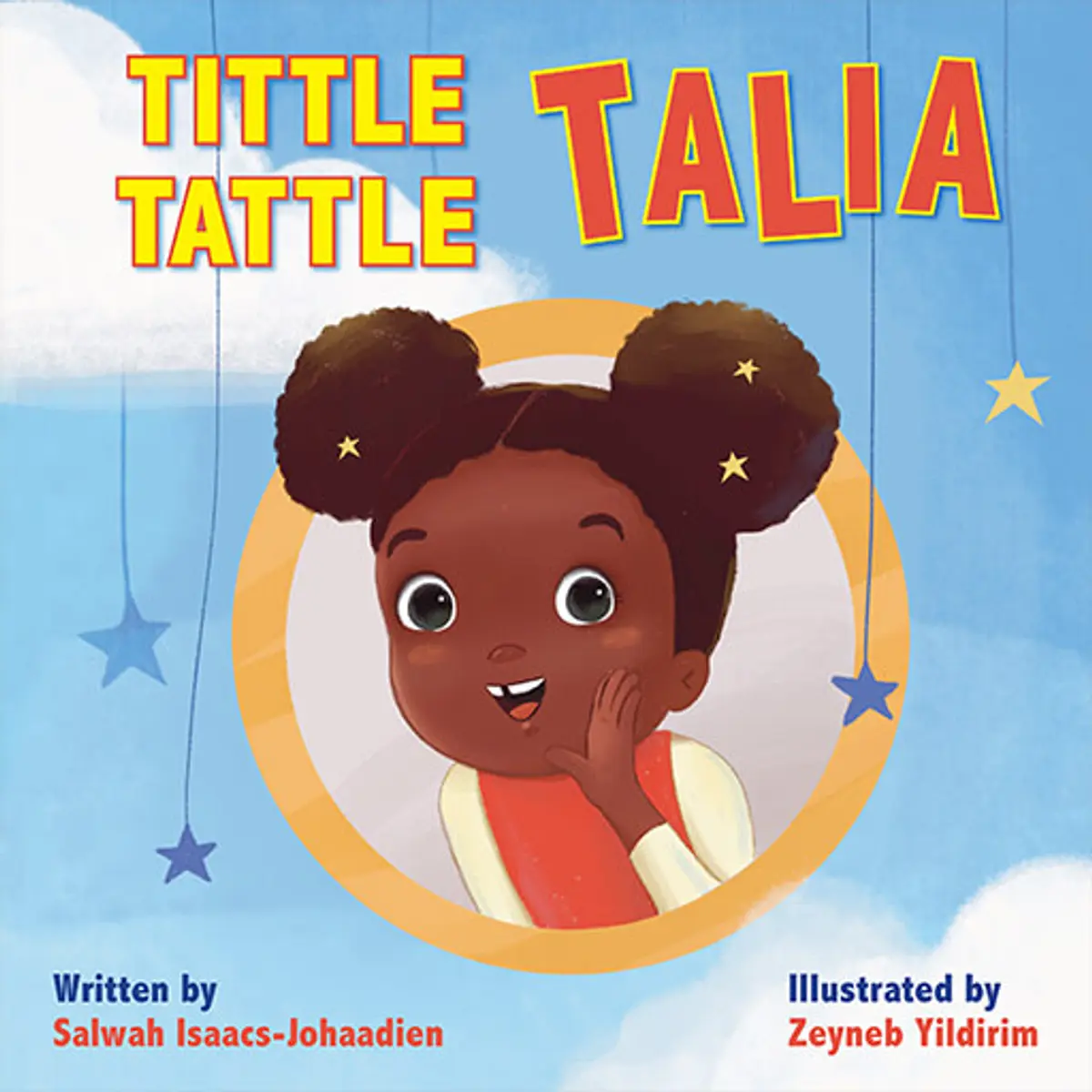
Tittle Tattle Talia is an Islamic picture book for children aged 7 to 12 about a girl who loves spreading gossip, and what happens when her tales grow bigger and hurt the people around her.
Talia's favourite words are "You'll never guess", "They say that" and "Did you hear?" Her family warns her again and again: her sister says she might have to eat her words, her brother says nonsense leaves a bad taste in the mouth, and her father reminds her that the Prophet ﷺ taught us to speak good or hold our tongues. But Talia cannot see the harm. At school, the other children laugh at her stories, and the attention makes her feel good, so her tales about a shy boy called Ahmed, and then about everyone else, grow wilder and less true.
One by one, her friends stop talking to her. She is left out of a party, and at rounders practice no one will play on her team. When the truth comes out in front of the class, Talia finally understands what her family meant, and she apologises. Then her friends surprise her: they realise that listening to gossip and laughing at it helped spread it, and they apologise too.
The story shows children how gossip grows and hurts, why saying sorry matters, and that listeners share the blame. It ends with the hadith: whoever believes in Allah and the Last Day should speak good or remain silent.
It is written by Salwah Isaacs-Johaadien and illustrated by Zeyneb Yildirim, and it is music-free.
What your child will learn
- Whoever believes in Allah and the Last Day should speak good or stay silent.
- Gossip hurts people, and it grows bigger and less true each time it is passed on.
- Listening to gossip and laughing at it helps to spread it.
- Saying sorry is hard, but it is the first step to putting things right.
The story of Tittle Tattle Talia
Talia loves to tell tales
Talia enjoyed telling tales, but not the kind found in storybooks. Her favourite words were "You'll never guess" and "They say that". She also liked "I heard that" and "Did you hear?" Talia loved to tittle-tattle. She was always talking about other people, and she loved listening to gossip too. It upset her family, but they could not get her to stop.
"You'll never guess what a scaredy-cat Ahmed is," she said one day.
"Ahmed is just a shy boy," said her sister. "If he heard you, his feelings would be hurt. You should watch what you say, or you might have to eat your words."
Eat her words? Talia wondered how.
When she said something nasty about an auntie, her brother shook his head. "Talking nonsense will leave a bad taste in your mouth." When she whispered that a family friend's children never took a bath, her father was shocked. "The Prophet, peace and blessings be upon him, taught us to speak good or hold our tongues," he said. And when she began a story about someone they did not even know, her mother stopped her. "Astaghfirullah! I don't want to hear anything about anyone. It's better to zip your lips."
Talia could not understand why her family was so uptight. She was only telling them what she thought, or what she had heard. Surely there was no harm in that?
The tales grow bigger
If her family would not listen, others would. At school, Talia told everyone how scared Ahmed had been at the park, that he wiped his nose on his sleeve, and that he had shrieked at a toy mouse. The other children laughed, and the attention made Talia feel good about herself. Soon she did not care that people's feelings were being hurt. It was not her fault if Ahmed felt bad, she told herself.
The more attention she got, the more she spiced up her tales. Between licks of ice cream, she said that Ahmed was afraid of the dark, slept with the lights on and needed his parents to sleep on his floor. No one asked how Talia could know what happened at Ahmed's house. Her tales were full of made-up fibs now, and her tongue was out of control.
Then the children who had laughed became the subjects of her tales themselves. Nora wore a headscarf because she had no hair. Johnny had copied Ali's test. Sarah was a show-off. Mustafa had said Ali's ears were enormous. Betty ran fast because she had extra toes. Soon every child was wondering when they would be next, and nobody wanted to hear nasty gossip about their friends any more.
Left out
Talia's friends began to ignore her, first in group work, then at lunch. They did not even want ice cream in the park with her. Then she heard the girls talking about Sarah's party, and she had not been invited. Talia felt hurt.
That week, Coach Hafsa was choosing the best players to try out for the school rounders team. When the class split into two teams, no one picked Talia. When the coach put her on a team, both teams sat down and refused to play. It was too much. Talia burst into tears. "Why won't you play with Talia?" asked Coach Hafsa.
At first no one spoke. Then it all came out. Sarah said Talia had called her a show-off behind her back. Nora said Talia had told everyone she had no hair. Betty said Talia had said she had twelve toes, and Ali said Talia had told him what Mustafa supposedly said about his ears. Talia's face burned. She stared at the ground, and saw Ahmed's trainer scuffing the grass. When she looked up, he was looking straight at her, and he said nothing at all.
If only she had listened to her family. If only she had zipped her lips and held her tongue.
Eating her words
"Is this true, Talia?" asked Coach Hafsa.
"I was only joking," Talia whispered.
"Jokes are not meant to hurt people," said the coach. "You should apologise."
What a hard thing it was to eat her words. Once the tales were told, they could not be taken back, and gossip had left a bad taste in her mouth after all. She swallowed the lump in her throat and squeaked, "I'm sorry." Then she took a deep breath, looked straight at Ahmed, and said more clearly, "I'm sorry I said those terrible things." She thought she saw him nod.
Coach Hafsa sent her home. As she walked away, Talia saw the others huddled together and was sure they were tittle-tattling about her now. But Ahmed was walking away from the group. After everything she had said about him, he did not want to listen to tales about her, or tell them. Talia realised that Ahmed was braver and better than she could ever hope to be.
Starting again
Near her front gate, where her parents were working in the garden, Talia heard voices calling, "Wait, Talia, wait!" Ali, Nora, Sarah and some of the others were running after her.
"We came to apologise!" said Nora, out of breath.
Listening to gossip was just as bad as telling it, Ali explained. By listening and laughing, said Sarah, they had all helped to spread it. They should have stopped her, Nora added, and it was their fault too that Ahmed had been hurt and left out. "We are all guilty," said Betty. "So let's start over."
"First, let's find Ahmed and apologise properly," said Talia. "Then let's promise to help each other speak only good about others. No more tittle-tattling!"
Talia's parents were so pleased with what they heard that they gave each child money for an ice cream in the park, and Talia asked for money for one more.
Find more stories about honesty, good manners, forgiveness and friendship.
Where this story comes from
- Sahih al-Bukhari 6018: Whoever believes in Allah and the Last Day should speak good or keep silent.
- Sahih Muslim 47: The same hadith, narrated by Abu Hurairah.
Talk about it afterwards
- Why did Talia enjoy telling tales about other people?
- What did her family mean by "eat your words" and "a bad taste in your mouth"?
- How do you think Ahmed felt, and why did he walk away from the gossip?
- Why did Talia's friends say sorry too?
- What could you do if someone starts telling you gossip?
Words to know
- Astaghfirullah
- I ask Allah to forgive me.
- Hadith
- A saying or action of the Prophet Muhammad ﷺ, passed down by his companions.
Frequently asked questions
What age is Tittle Tattle Talia suitable for?
Children aged 7 to 12. It deals with gossip, being left out and saying sorry, which children of this age meet at school.
Is Tittle Tattle Talia based on a hadith?
Yes. It ends with the hadith that whoever believes in Allah and the Last Day should speak good or remain silent, reported by Abu Hurairah in Sahih al-Bukhari and Sahih Muslim.
How long is Tittle Tattle Talia?
About 12 minutes to read aloud.
Does Tittle Tattle Talia have music?
No. It is music-free.