
What Age Should a Child Start Fasting? How to Start Small
The range of scholarly views, an age-by-age plan from a half day to a full month, the signs to stop and what to tell the school.
10 min read Areeba Hasan

Summary
Fasting in Ramadan is not obligatory for a child until puberty, and scholars differ on when to start practising: some look to seven, as with prayer, others to ten or twelve, and others say simply when the child is able. Some families begin with a few hours or a half day at seven or eight and build up to full days, stopping whenever the child is unwell. A full month comes anywhere from eight or nine to the early teens, depending on the child, their health and the country.
Fasting in Ramadan becomes obligatory at puberty; before that, every fast is practice.
Perhaps your six-year-old announced at iftar that they were fasting tomorrow, "like Baba". Here is how to say yes, a little at a time. For the month itself, see our Ramadan page for families.
Do children have to fast in Ramadan?
No. Fasting becomes obligatory at puberty, which comes at different ages for different children. Prophet Muhammad (peace be upon him) said there are "three (persons) whose actions are not recorded", and one of them is "a boy till he reaches puberty" (Sunan Abi Dawud 4403, graded Sahih by al-Albani).
Before puberty, the question is training, and scholars differ. IslamQA sets out the principle: "The age at which parents should start to teach their children to fast is the age at which they are able to fast, which will vary according to each child's physical makeup" (IslamQA 65558). It gathers the classical views:
- Al-Kharqi: "When a child is ten years old and is able to fast, he should start to do so."
- Ibn Qudamah names "'Ata, al-Hasan, Ibn Sirin, al-Zuhri, Qatadah and al-Shafi'i" among those who held that a child should be told to fast when able.
- Al-Awza'i: "If he is able to fast for three consecutive days without interruption and without becoming weak, then he should be made to fast Ramadan."
- Ishaq: "When (a child) reaches the age of twelve I think that he should be made to fast so that he gets used to it."
- Ibn 'Uthaymin: "A young child should not be forced to fast until he has reached the age of adolescence, but he may be told to fast if he is able to do it, so that he may get used to it."
Ibn Qudamah compares fasting with prayer: a child should be made to fast "just as he should be made to pray" (IslamQA 65558). For prayer, the Prophet (peace be upon him) said: "Command your children to pray when they become seven years old" (Sunan Abi Dawud 495, graded Hasan Sahih by al-Albani). That hadith is about salah, not fasting, and the UK Islamic Mission notes that some children start fasting at 7 or 8.
The common ground: no obligation before puberty, and practice when the child is able. Scholars differ on how firmly to insist: al-Awza'i said a child who can manage three days in a row should be made to fast, Ishaq said at twelve, and Ibn Qudamah likened it to prayer; Ibn 'Uthaymin said a young child should not be forced. For the age, and how firmly to encourage, follow the scholar your family trusts.
What age do most children start fasting?
Some children try their first practice fasts at seven or eight, and a full month comes anywhere from eight or nine to the early teens. The UK Islamic Mission says: "Some children have the intention to fast from the ages of 7 or 8, whilst others might wait till they get older", and "Often, many children begin to fast regularly between the ages of 10 to 14, depending on their maturity" (UKIM).
Health for Kids, a UK children's health site, says: "Most children complete a full month around 8-9 years old." It adds: "This is dependent on the child, their health and the country" (Health for Kids).
Children practising beside adults is not new. Ar-Rubi' bint Mu'awwidh (may Allah be pleased with her) described the fast of Ashura: "we used to fast on that day regularly and also make our boys fast" (Sahih al-Bukhari 1960). In Sahih Muslim's narration, they "made toys out of wool for them and when anyone felt hungry and wept for food we gave them these toys till it was the time to break the fast" (Sahih Muslim 1136a).
That was Ashura, not Ramadan, but the idea still works: a game or a story to carry a child to Maghrib.
How do I start small? An age-by-age plan
Start with part of a day, then whole days at weekends, then school days, then the month, moving up only when your child copes well. Health for Kids describes the same order, from "fasting half day" to "the whole month", spread over several Ramadans (Health for Kids).
| Age | What to try | Words to use |
|---|---|---|
| Under 7 | Take part without fasting: wake for suhoor at a weekend, lay the iftar table, open the fast with a date | "You are helping our family fast." |
| 7 to 9 | Fast until lunch, then a half day, then one full day at a weekend | "You fasted until lunch. Allah rewards every bit you do." |
| 10 and up | Full days at weekends, then some school days, as many as they manage well | "Fasting on a school day is hard. Well done for trying." |
| Nearing puberty | Most or all of the month, as practice for when it becomes obligatory | "Soon this will be your own fast, and you are ready." |
Puberty often comes earlier for girls, so it can fall inside these practice years. Once a child has reached it, the fast is no longer practice.
IslamQA says a child is rewarded for every practice fast: "Whatever the child does of obligatory duties or mustahabb deeds before reaching puberty, he will be rewarded for them" (IslamQA 78591).
When the first full fast comes, mark it. Many South Asian families celebrate a child's first roza with a roza kushai, an iftar in the child's honour with family and friends.
A few things make the first fasts easier:
- A story the night before. In our game Safa Breaks Fast, in the Miraj Stories app, a girl has been fasting all day and your child helps her choose what to eat and drink.
- A proper suhoor with water, even for a fast until lunch.
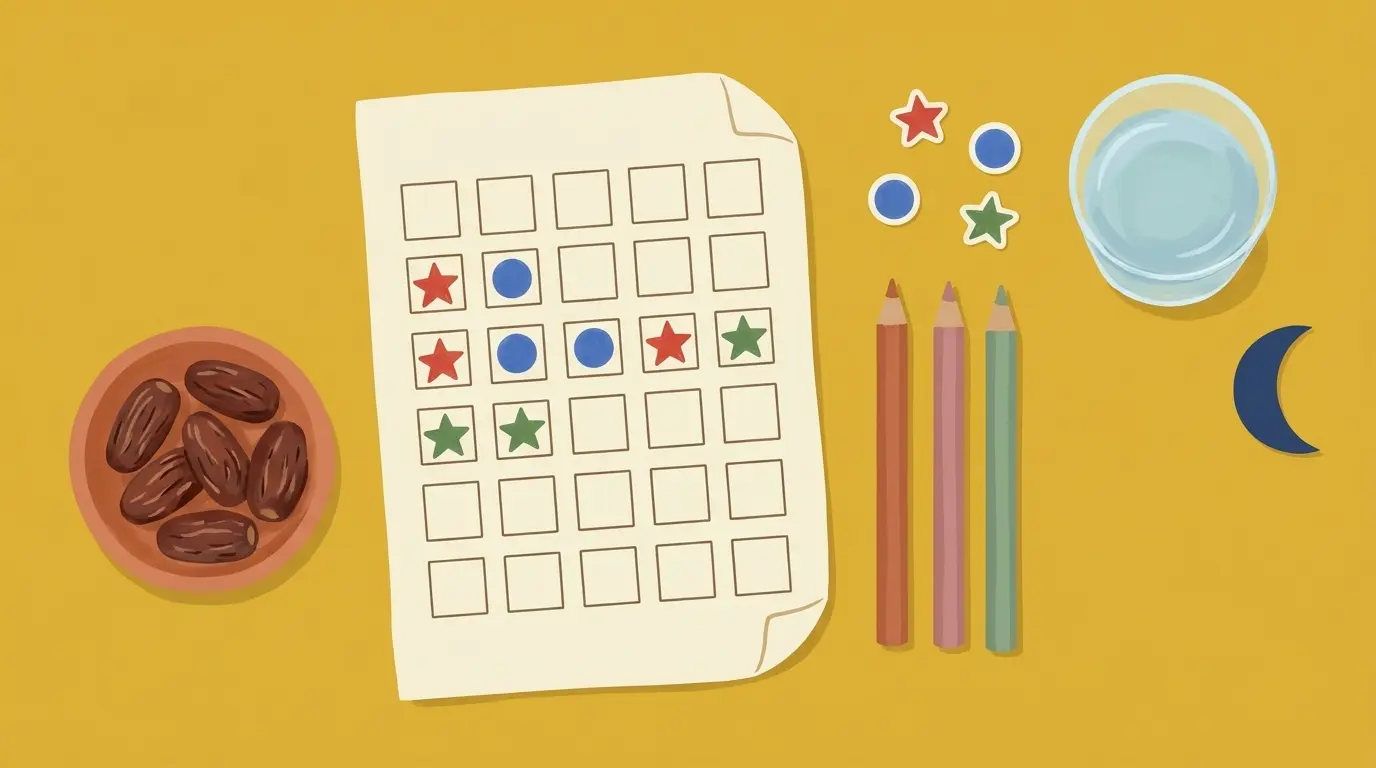
- A paper chart on the fridge, with a sticker for each practice fast.
- Praise the effort, not the hunger. "You kept going" beats "Are you hungry yet?"
How do I know my child is ready, and when should they stop?
Signs your child may be ready: they ask to fast themselves, they are well, and they have managed a shorter fast without becoming upset or weak.
Stop the fast when your child is tired, dizzy or unwell. UKIM says: "If a child begins to feel tired or dizzy during their fast then it is best to let them eat or drink", and "If a child is to become poorly then there is no harm in breaking the fast" (UKIM). Saudi Arabia's Ministry of Health advises not letting a sick child fast, and ending the fast straight away if your child seems tired or dehydrated (Saudi Ministry of Health).
Health for Kids adds: "if they are struggling, give them breaks away from fasting" (Health for Kids). Ibn 'Uthaymin says that "if it is proven that it is harmful to him, then he should be stopped from fasting" (IslamQA 65558).
Because a child is not yet obliged to fast, scholars hold that a broken practice fast leaves nothing to make up. Of the days a child missed before puberty, Ibn Qudamah says "he does not have to make them up, whether he fasted them or not", and calls this "the view of the majority of scholars" (IslamQA 78591).
If your child has a health condition, ask your GP before they fast at all. For urgent advice in the UK, call NHS 111.
Can my child fast on school days?
Yes, if your child is ready, and it goes best when the school knows in advance. Ramadan 2027 is expected to begin on or around Monday 8 February 2027 (The National, updated 6 October 2026). This means many fasting days will be school days.
For parents. Before Ramadan, write a short note to the class teacher: which days your child plans to fast, that they may break the fast if they feel unwell, and what you would like for PE.
Schools set their own rules. One primary school in Ealing, in a policy written in 2016, says "we only allow children in Year 6 to fast", and "All parents must inform the school in writing if they wish their child to fast for part or all of the month of Ramadan" (Lady Margaret Primary School). Its fasting pupils still do PE, but not strenuous games, and a distressed or unwell pupil is encouraged to break the fast with an emergency snack and water.
For teachers. A quiet room at lunch, lighter PE and no food rewards in class that month all help. Treat a child who breaks their fast as practising, not failing. A Ramadan story read at the start of the month can help the whole class understand why some friends are not eating. If your school uses tablets, Miraj Stories for schools explains how the app sits beside your lessons.
My child is too young to fast but wants to join in. What can they do?
Plenty. Children can take part in Ramadan long before they fast every day, by waking for suhoor, breaking the fast at iftar and reading the Quran with their family, as our Ramadan stories and activities page puts it.
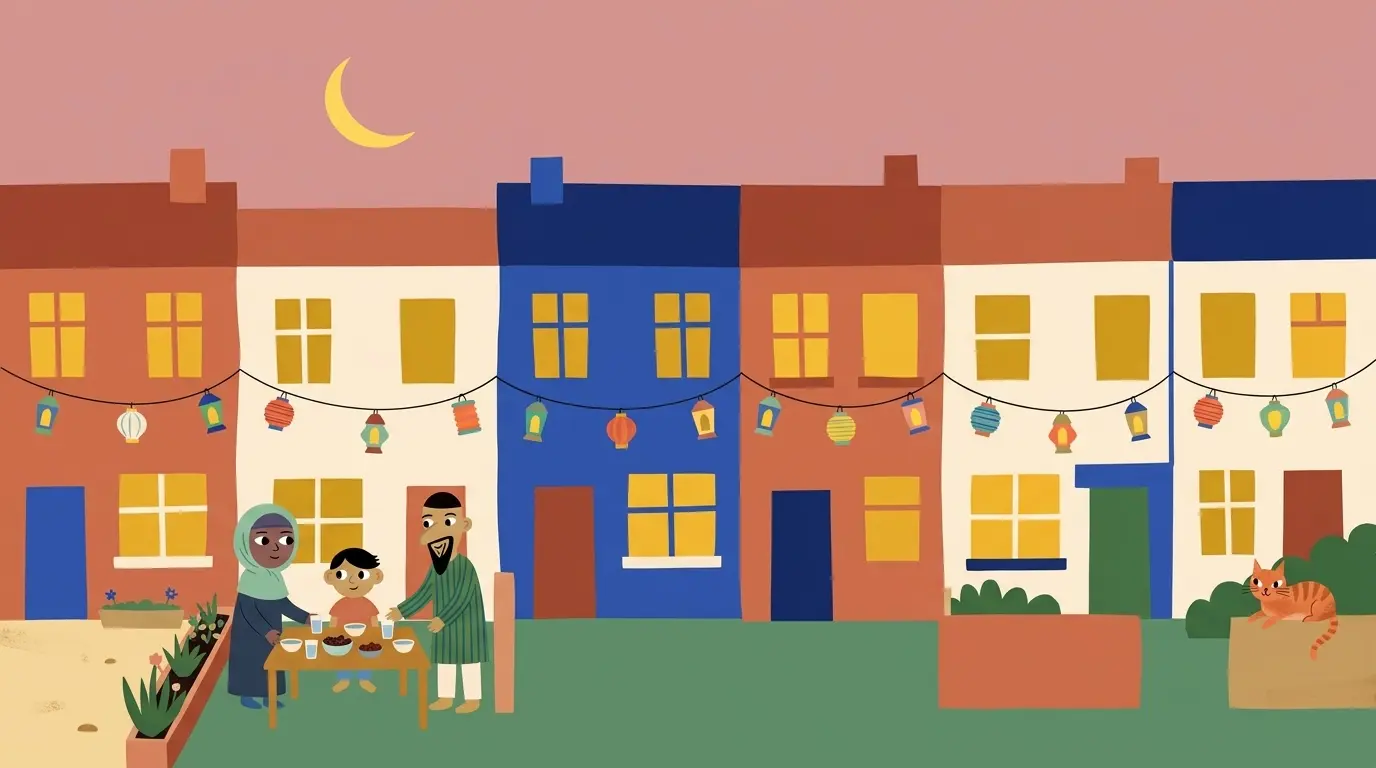
Some ideas for a five- or six-year-old:
- Wake for suhoor at a weekend and eat with the family.
- A "fast" from sweets until Maghrib.
- Lay the iftar table and hand out the dates.
- A Ramadan chart with a star for each kind deed.
- A bedtime story about a child who fasts.
Frequently asked questions about children and fasting
At what age is fasting compulsory in Islam?
Fasting in Ramadan becomes compulsory at puberty (bulugh), not at a set age. Before that, a child is not obliged to fast, and any fasting they do is practice. The Prophet (peace be upon him) said the deeds of "a boy till he reaches puberty" are not recorded (Sunan Abi Dawud 4403, graded Sahih by al-Albani). Puberty comes at different ages for different children, and often earlier for girls than for boys. Scholars encourage parents to start practice fasts before then, when the child is able, so the first obligatory Ramadan doesn't come as a shock (IslamQA 65558). For when and how to begin, see the age-by-age plan above.
Can a 7-year-old fast?
Yes, as practice: a few hours or a half day is a good start. It is not obligatory before puberty, and scholars differ on when training starts: about seven by analogy with prayer, ten, twelve, or whenever the child is able.
Does my child have to make up a broken fast?
No, not for fasts before puberty. Ibn Qudamah says of those days that "he does not have to make them up, whether he fasted them or not", the view of the majority of scholars (IslamQA 78591).
Is fasting harmful for children?
It depends on the child and how it is done. The Saudi Ministry of Health advises not letting a sick child fast, and ending the fast straight away if your child seems tired or dehydrated. Start gradually, and stop whenever your child is unwell.
Should I reward my child for fasting?
A small reward can help, but praise the effort most. A sticker chart or a special job at iftar works well; avoid making food the prize.
When is Ramadan 2027?
It is expected to begin on or around Monday 8 February 2027, depending on the moon, with Eid al-Fitr on 9 or 10 March 2027 (The National). Ask your local mosque nearer the time.
What if my child eats by mistake?
Tell them not to worry. The Prophet (peace be upon him) said: "If somebody eats or drinks forgetfully then he should complete his fast, for what he has eaten or drunk, has been given to him by Allah" (Sahih al-Bukhari 1933).
Where to go next
Before Ramadan, read our Ramadan page with your child and decide together what their practice will be this year: a few hours, a half day or a weekend. For raising children with the Islamic year as a rhythm, read our guide to Islamic parenting.
Explore the Miraj library
Explore the whole library


Read more from Miraj for Grown-ups

How to Explain Isra and Mi'raj to Children
How to explain Isra and Mi'raj to a child of 4 to 9, with the words to use at each age and honest answers to the questions they ask.
Best Islamic Apps for Kids (2026), by Age and Need
The best Islamic apps for kids in 2026, sorted by age and by what you want them for, with prices, ads and music checked on the day.
How to Teach the Arabic Alphabet at Home (When You Can't Read It Yourself)
Children don't remember shapes. They remember characters, stories and games. What we learned building the Arabic letters in Miraj, and how to use it at home.