Circle of Sandcastles
Shy Maimuna finds the courage to defend Mutmin, a deaf classmate whose sandcastles are wrecked by bullies, in a picture book based on a hadith. Ages 4 to 9.
Start with a 7-day free trial.
What is Circle of Sandcastles about?
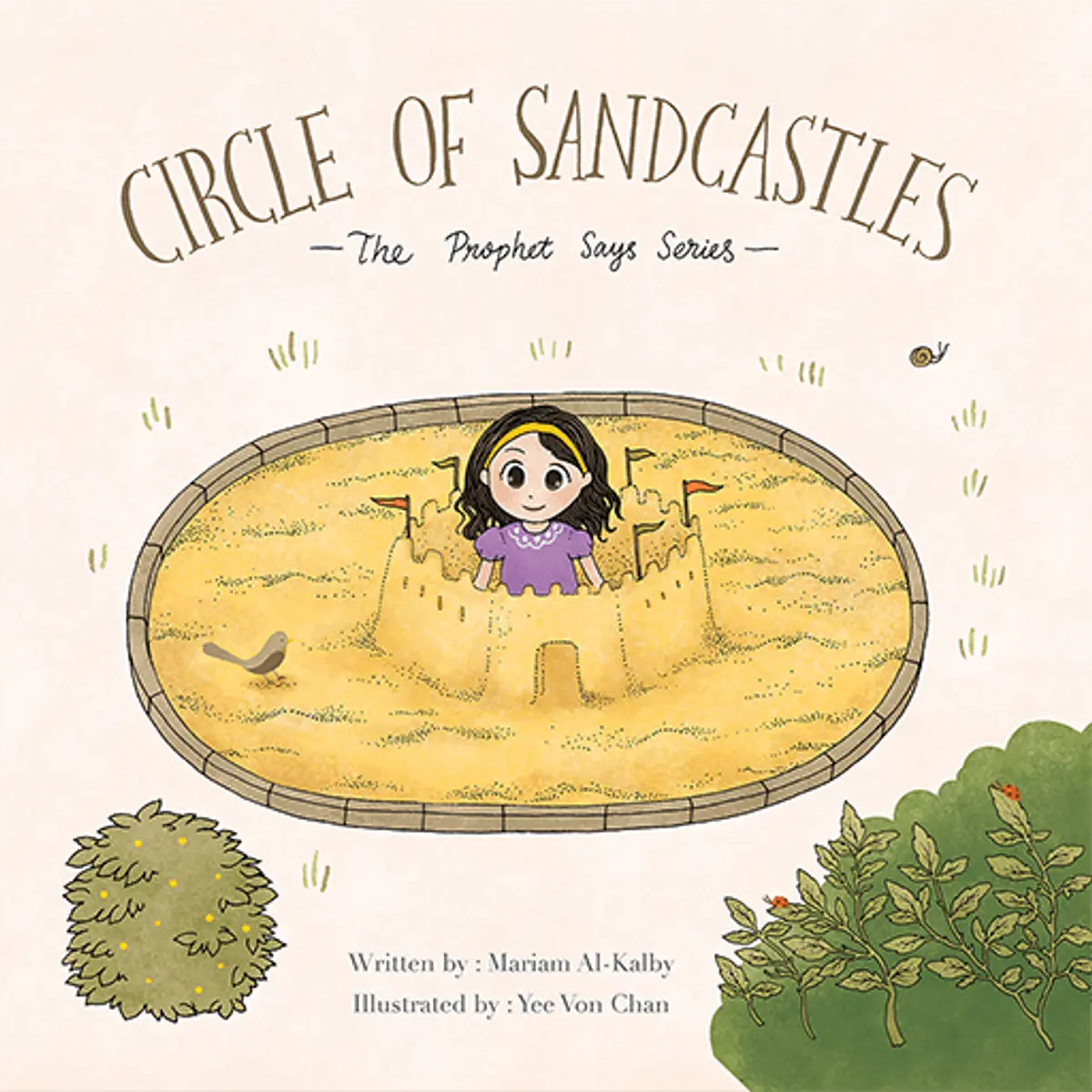
Circle of Sandcastles is an Islamic picture book for children aged 4 to 9 about a shy girl who finds the courage to stand up for a deaf classmate, based on a hadith about changing what is wrong.
Every Sunday, Shy Maimuna plays at the park near her home. One day she sees three older children pick on Mutmin, a boy from her class who is building a sandcastle on his own. When he does not answer them, they stamp on his sandcastle. Maimuna watches from her swing with a knotted stomach, because she knows why he did not answer: Mutmin is deaf.
The next week, the bullies crush all four of his sandcastles, and Maimuna shouts, "Hey, that's not nice!" But words alone do not stop them. The week after, she overcomes her shyness, runs to Mutmin's side, tells the children he cannot hear them and starts collecting his toys. Two of the bullies sit down in the sand, feeling guilty, and Mutmin hands them a shovel so that they can all build a circle of sandcastles together.
Part of The Prophet Says series, written by Mariam Al-Kalby and illustrated by Yee Von Chan, the story brings to life the hadith about changing a wrong with your hand, your tongue or your heart. It shows children that being brave does not mean not being scared, and that doing what is right can turn bullies into friends.
What your child will learn
- When we see something wrong, we should try to change it with our actions, our words or at least in our hearts.
- Being brave does not mean we are not scared.
- We should stand up for people who are being treated unkindly.
- Kindness can turn people who were unkind into friends.
The story of Circle of Sandcastles
A boy in the sandbox
On a sunny day, Shy Maimuna was swinging at the park near her home. As she swung higher and higher, she noticed a boy from her class playing in the sandbox across the playground. He was building a sandcastle all by himself.
All of a sudden, she heard loud noises and shouting in the bushes behind the benches. Three rowdy older children were causing a ruckus. They pounced onto the playground, kicked the swings and climbed up the slides. Then they walked up to the boy and sat down at the edge of the sandbox.
The girl in the group glanced at the name tag on his kameez. "Hey, Mutmin, can we play with you?" she asked. Mutmin just stared into the sandbox and kept pouring sand into his bucket. "What are you building?" she asked. Mutmin did not reply. "What's your problem? Can't you hear or something?"
Mutmin felt someone looking at him, so he looked up and smiled at them. Watching from her swing, Shy Maimuna gripped the chains with sweaty hands. Her stomach was in knots and her mouth felt dry.
"Answer when someone is talking to you," one of the boys said to Mutmin, "or I'm going to smash this sandcastle right before your eyes." Mutmin still said nothing. With a smirk, the boy lifted his dirty shoe and stomped on the sandcastle. The two boys took turns wrecking it while the girl stood by and laughed. Tiny tears rolled down Mutmin's face, and then his face turned red and he pushed one of the boys. "Let's get out of here!" said a boy, and they raced out of the park.
Shy Maimuna's eyes filled with tears too. She felt terrible for Mutmin, because she knew why he had not answered those bullies. Mutmin was deaf. She went home that day with a heavy heart, and all week her heart melted every time she remembered how they had treated him.
The second Sunday
The next Sunday, she walked to the park as she did every week. As she hung upside down on the monkey bars, she saw the same children zipping around the playground on their bikes. She quickly flipped herself up and looked for Mutmin. He was in the sandbox, building four sandcastles this time, all in a neat circle.
Her heart pounded so hard that she thought others could hear it, because she knew they would bully him again. And they did. They stomped on his toys and crushed all four sandcastles. Mutmin tugged at their clothes to make them stop, but they pushed him away, and one boy pushed him so hard that he fell to the ground.
"Hey, that's not nice!" Shy Maimuna shouted. She leapt off the monkey bars and ran across the field, her curly hair bouncing around her face and her feet kicking up the dirt, until she reached the edge of the sandbox. She knew the children had to be stopped, because being mean was not the right thing to do.
The children stopped and looked at her. "Why do you care about this big baby?" said the girl. They kicked Mutmin's toys a few more times and zoomed off on their bikes. Shy Maimuna had thought that saying something would stop them. But it was not enough.
Taking action
The next week, as she walked towards the playground, she saw the same group tossing Mutmin's sand toys around and stomping on his sandcastles again, while Mutmin threw sand at them. Her heart felt ready to burst like a bird out of its cage. This time she overcame her shyness. She felt as if she had sprouted wings as she swooped onto the playground and ran straight to the sandbox.
"Leave him alone! That's not nice!" she shouted. She rushed to Mutmin's side and said bravely, "Mutmin can't hear you. He's deaf!"
The children's eyes grew as big as footballs. Shy Maimuna calmly turned round and began to collect Mutmin's toys. His face, which had been full of anger, now shone like the sun on a clear day, and the two of them began to play together.
One of the boys shrugged his shoulders and rode off on his bike. The other two slowly sat down in the sand, feeling guilty. Mutmin eagerly handed them a shovel, and together they all began to build a circle of sandcastles again.
Shy Maimuna had learned a valuable lesson. It was not enough to want to change something in her heart, or even to speak up with her words. She had to stand up for what was right and take action, even when she was scared.
Find more stories about kindness, courage and friendship.
Where this story comes from
- Sahih Muslim 49: Whoever of you sees something wrong, let him change it with his hand; if he cannot, then with his tongue; and if he cannot, then with his heart, and that is the weakest of faith.
Talk about it afterwards
- Why didn't Mutmin answer the older children?
- How did Maimuna feel when she watched the bullies, and what did she do?
- Why was shouting "That's not nice!" not enough the second time?
- What could you do if you saw someone being bullied?
Words to know
- Hadith
- A report of what the Prophet Muhammad ﷺ said or did.
- Kameez
- A long shirt or tunic, often worn with loose trousers.
Frequently asked questions
What age is Circle of Sandcastles suitable for?
Children aged 4 to 9. Young children follow Maimuna's feelings as she watches, and older children can talk about what they would do in her place.
Is Circle of Sandcastles based on a hadith?
Yes. It is based on the hadith, reported in Sahih Muslim, that whoever sees something wrong should change it with their hand, or their tongue, or at least in their heart.
How long is Circle of Sandcastles?
About 6 minutes to read aloud.
Who wrote Circle of Sandcastles?
Mariam Al-Kalby wrote it and Yee Von Chan illustrated it. It is part of The Prophet Says series.