A Sense of Gratitude: Exploring the Five Senses
A rhyming picture book that thanks Allah for our five senses, from wildflowers and Teta's cookies to the sound of the adhan, for children aged 4 to 9.
Start with a 7-day free trial.
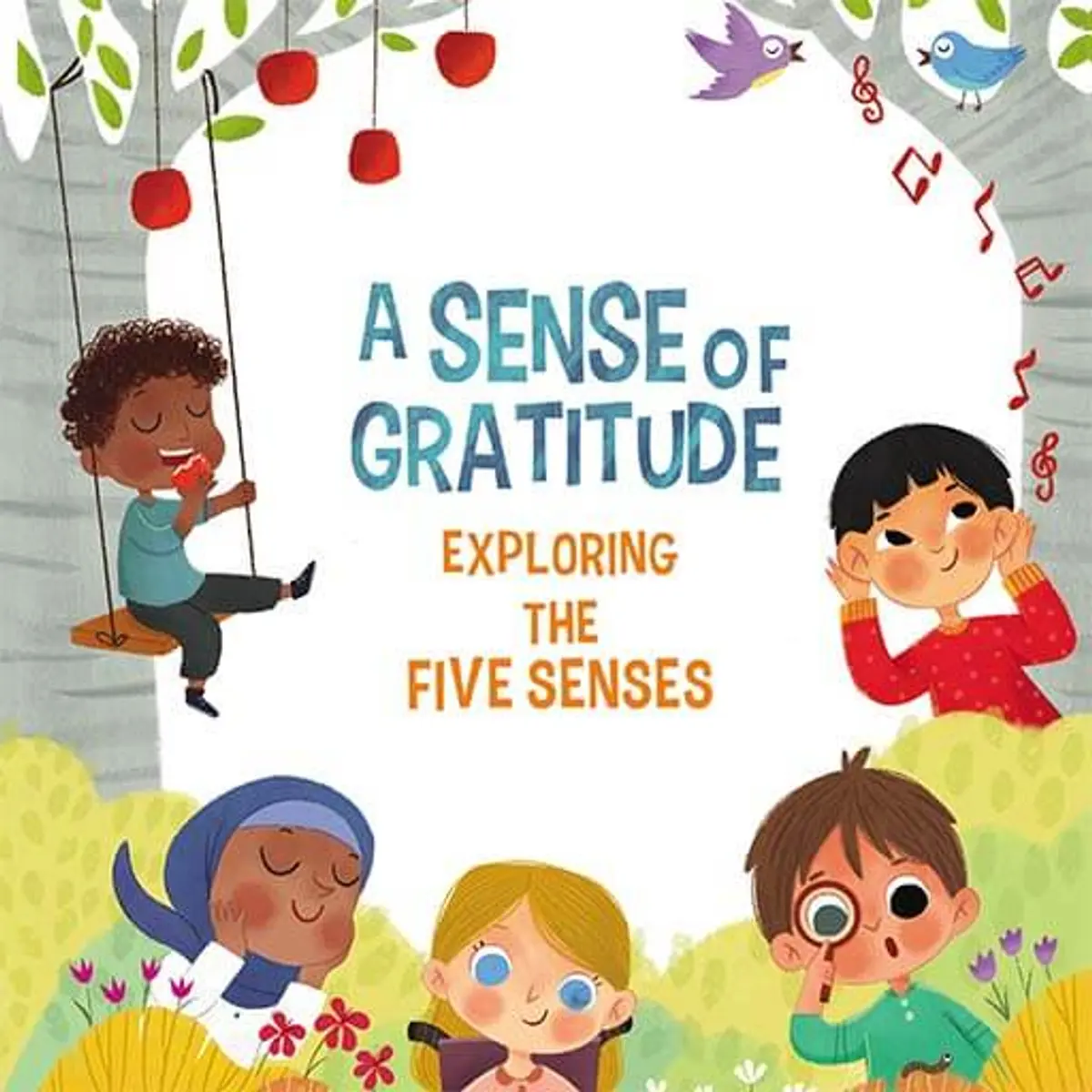
What is A Sense of Gratitude: Exploring the Five Senses about?
A Sense of Gratitude: Exploring the Five Senses is an Islamic picture book for children aged 4 to 9 that goes through the five senses one by one and thanks Allah for each of them.
The book is a poem in a child's voice. With their eyes, they enjoy Allah's creation: mountains, trees, bees, birds high in the sky, ants marching in a line and wildflowers of every colour. With their nose, they smell Teta's cookies and fresh mint from the garden, and learn from their science teacher how to waft a smell safely towards their face. Their tongue tastes cake and apple pie, but also the simple foods Allah created, like apples, carrots and honey.
With their hands, they feel a warm blanket on a cold day, the touch of a loved one when they are ill, and slimy frogs and hairy dogs. They raise their hands to make dua, because Allah tells us to call on Him when we are sad. And with their ears, they hear the adhan calling them to pray, a fire engine rushing to help, and a baby brother who needs them.
A short chorus comes back at the start and the end: two eyes to see, a nose to smell, a tongue to taste, two hands to touch and two ears to hear. It helps children notice the gifts they use every day and say thank you to the One who gave them.
What your child will learn
- Allah gave us five senses, and each one is a gift.
- Seeing, hearing, smelling, tasting and touching help us enjoy Allah's creation.
- We can raise our hands and make dua when we are happy or sad.
- Thanking Allah for our bodies is part of being grateful.
The story of A Sense of Gratitude: Exploring the Five Senses
Five gifts from Allah
The child in this book was grateful to Allah, who had blessed them with five senses and made them in such a special way: two eyes to see, a nose to smell, a tongue to taste, two hands to touch, and two ears to hear, one on each side of the face. They used all five every day.
Eyes to see
With their eyes, the child enjoyed the beauty of Allah's creation: the mountains and trees, the butterflies and bees, the birds flying high in the sky and the tiny ants marching in a line. They could sit and watch the colourful wildflowers in the forest while time went by. Their eyes could see so many colours, purple, yellow and blue, and rich, royal colours like ruby, gold and silver too.
A nose to smell
Their nose sat in the middle of their face. Sometimes they whiffed, sometimes they sniffed, and often they wafted. Their science teacher had taught them to waft chemicals to keep safe, waving a hand to move the smell slowly towards the face. They enjoyed pleasant smells, like Teta's baked cookies and the fresh mint that grew in the garden. And when they passed a not-so-nice smell, they said, "Excuse me, I'm sorry, please pardon."
A tongue to taste
Their tongue had the important job of tasting delicious things: sweets, cake and apple pie, which were delicious but not very nutritious. Grown-ups told them to eat their fruit and vegetables. Some children might be sad about that, but this child enjoyed them all and was secretly glad. They got tired of sugary sweets, and so did their tummy. They enjoyed the simple things Allah created, like apples, cucumbers, carrots and honey.
Hands to touch
Their hands and skin let them feel the world: a cosy blanket fresh from the dryer on a cold winter day, and the hands of someone who loved them, rubbing their back and kissing their head when they were ill in bed. They touched the things they found in nature, like slimy frogs and hairy dogs. And they used their hands to make dua, whether they were happy or sad, because Allah tells us to call on Him when we are sad and do not know what to do.
Ears to hear
With their two ears, they heard the adhan: hurry up, it is time to pray. They covered their ears as a fire engine zoomed by, knowing help was on the way. They listened to Baba's footsteps coming in through the door, and they could never ignore their baby brother when he started to cry.
At the end, the child said the words again: two eyes to see, a nose to smell, a tongue to taste, two hands to touch and two ears to hear. Allah has given us five senses, and we use them every day. Thank you, Allah, for creating us all in such a special way.
Find more stories about gratitude and allah's creation.
Where this story comes from
- Surah An-Nahl 16:78: Allah brought you out of your mothers' wombs knowing nothing, and gave you hearing, sight and hearts so that you might be grateful.
- Surah Ghafir 40:60: Your Lord has said, "Call on Me, and I will answer you."
Talk about it afterwards
- Which of your five senses do you think you use the most?
- What is your favourite thing to see, smell, taste, touch or hear?
- What does the child in the book do when they feel sad?
- How can we thank Allah for our senses?
Words to know
- Adhan
- The call to prayer.
- Dua
- A prayer in your own words, asking Allah for something.
- Teta
- A word for grandmother used in many Arab families.
Frequently asked questions
What age is A Sense of Gratitude: Exploring the Five Senses suitable for?
Children aged 4 to 9. The rhyme and the repeated chorus suit young children, and older children can talk about how each sense helps them.
What does A Sense of Gratitude teach children?
What the five senses are, and that each one is a gift from Allah to thank Him for.
How long is A Sense of Gratitude: Exploring the Five Senses?
About 4 minutes to read aloud.