Allah Gave Me a Tongue to Taste
A rhyming picture book about taste, from bitter lemons to Zamzam and dates, that teaches children to thank Allah for their food. For ages 4 to 9.
Start with a 7-day free trial.
What is Allah Gave Me a Tongue to Taste about?
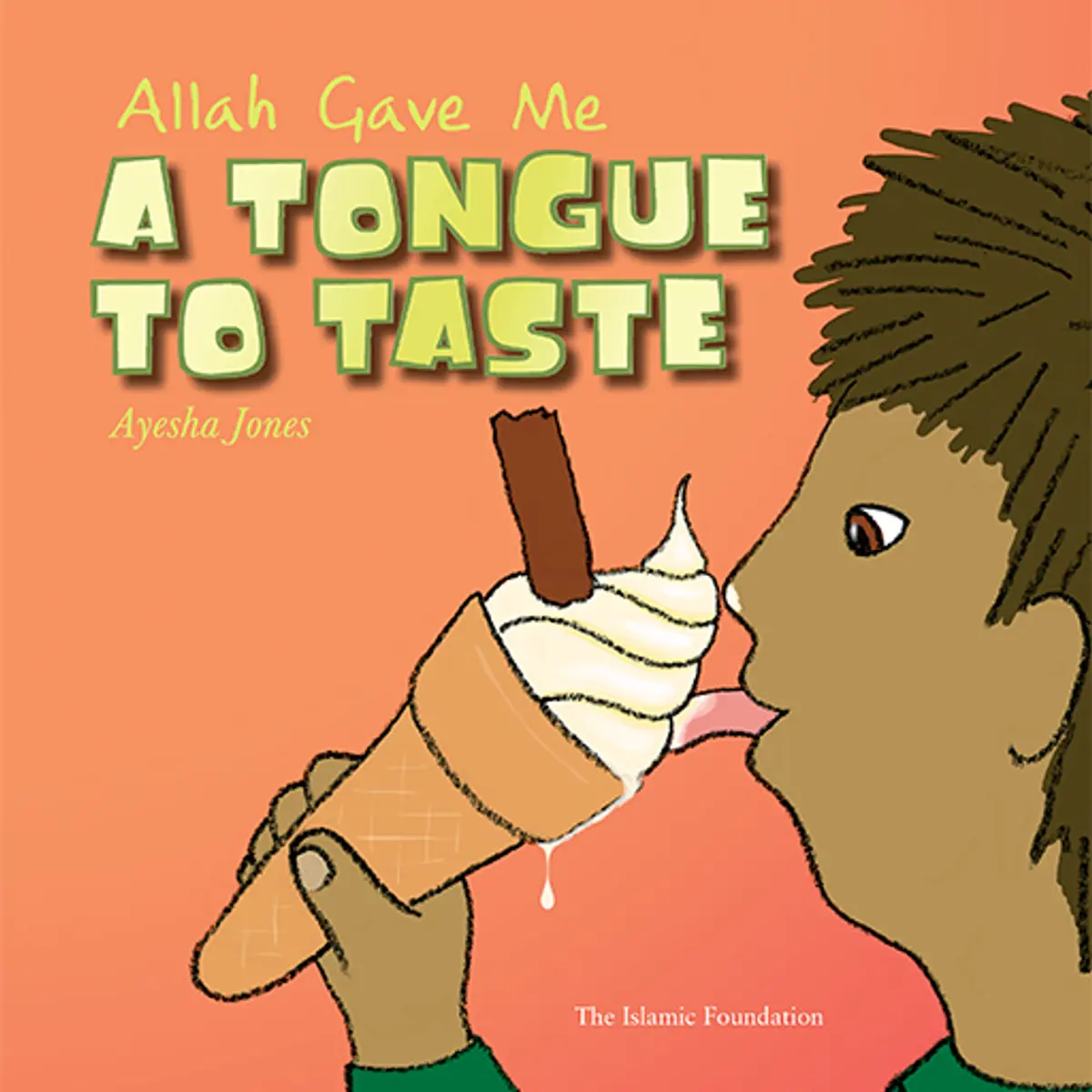
Allah Gave Me a Tongue to Taste is an Islamic picture book for children aged 4 to 9 about the sense of taste, and the many good foods Allah has given us to enjoy.
In rhyming verses, the book explains how the tiny taste buds on our tongue tell us whether something is a tasty treat. It goes through the tastes one by one: bitter lemons, sweet sugar, sour yoghurt and salty cheese on toast. Then come other things the tongue can tell, like cold ice cream and hot chillies, smooth cream, crunchy biscuits and fizzy drinks that tickle.
The book also teaches some good habits. Food helps us grow and keeps us healthy, but some foods are better for us than others. Children around the world eat in different ways, with chopsticks, with their hands or with a knife and fork, but everyone should finish their plate and waste nothing. The book names foods mentioned in the Qur'an, such as milk, honey, olives, figs, dates, grapes and ginger, and reminds children to be grateful, as the Prophet ﷺ taught.
Written by Ayesha Jones and published by The Islamic Foundation, the book ends with a child raising their hands after a meal and saying Alhamdulillah. It is a cheerful way to talk about healthy eating and thankfulness together.
What your child will learn
- Allah gave us our tongues and taste buds so we can enjoy our food.
- Food helps us grow, and some foods are better for us than others.
- We should finish our food and not waste any.
- Many good foods, like dates, figs, olives, milk and honey, are mentioned in the Qur'an.
- We thank Allah after we eat by saying Alhamdulillah.
The story of Allah Gave Me a Tongue to Taste
Tiny taste buds
Allah gave us a tongue to taste all sorts of food, like delicious apple pie, and to find out which flavours we like best. The child in this book liked to close their eyes, put some food on their tongue and guess what it was, even though the guess was sometimes wrong. Tiny taste buds taste everything we eat, and they tell us whether it is nasty or a tasty treat.
Bitter, sweet, sour and salty
The book went through the tastes one by one. Lemons are bitter and not easy to eat, but sugar is sweet, a welcome treat. Yoghurt is sour, though not when it has fruit in it, and fruit keeps us well, healthy and fit. Savoury things are salty, like chicken and roasts, and one of the child's favourites was cheese on toast.
The tongue can tell other things too. Ice cream is cold and chillies are hot, and the taste buds decide whether to eat something or not. Cream feels smooth and biscuits are crunchy, and after something munchy the child quickly cleaned their teeth. Fizzy drinks made their taste buds tickle, until they began to chuckle and felt quite dizzy.
Good food, and no waste
Food is good for us: it helps us grow and keeps us healthy. But some foods are good for us and some are not, and Mummy will know which is which.
The child's friends came from many different lands. Some ate with chopsticks, some with their hands, and others with knives and forks. But whichever way they ate, the book said, eat up every crumb and leave nothing in your dish. The child loved spaghetti, and always started giggling when it wriggled off the fork. Chicken curry with chapattis made a good, tasty meal, eaten mild or hot, depending on how you feel.
Foods from Allah's book
We know what we should eat: all that is halal, including meat, milk and honey, olives, figs and dates, fruit and vegetables, ginger and grapes. All these foods are in the Qur'an, Allah's holy book, and the book invited children to sit down together and have a look. The Prophet ﷺ taught us to be grateful for what Allah has given us. And there is no better drink than pure Zamzam water, with dates from the desert.
At the end, the child thanked Allah for providing so many foods, in such abundance and variety, all scrumptious and delightful. They raised their hands to thank Allah, finished their meal and said, "Alhamdulillah."
Find more stories about gratitude and allah's creation.
Where this story comes from
- Surah An-Nahl 16:66-69: Allah gives us milk to drink, the fruit of date palms and grapes, and honey from the bees, in which there is healing.
- Surah At-Tin 95:1: By the fig and the olive.
- Surah Al-Insan 76:17: In Paradise they will be given a cup of drink mixed with ginger.
Talk about it afterwards
- Can you name a food that is sweet, one that is sour and one that is salty?
- Which foods in the book are mentioned in the Qur'an?
- Why should we not leave food on our plate?
- What do you say when you finish your meal?
Words to know
- Halal
- What Allah allows, including food Muslims are allowed to eat.
- Zamzam
- The blessed water from the well in Makkah, near the Kaaba.
- Alhamdulillah
- All praise is for Allah. Muslims say it to thank Allah.
Frequently asked questions
What age is Allah Gave Me a Tongue to Taste suitable for?
Children aged 4 to 9. The rhymes suit young children, and older children can learn the names of the tastes.
What does Allah Gave Me a Tongue to Taste teach children?
How our sense of taste works, to eat well and waste nothing, and to thank Allah for the food He gives us.
How long is Allah Gave Me a Tongue to Taste?
About 3 minutes to read aloud.
Who wrote Allah Gave Me a Tongue to Taste?
Ayesha Jones wrote it, and it is published by The Islamic Foundation.
More like this
Allah Gave Me Two Hands and Feet
Story · Ages 4-9 · 2 min
Allah Gave Me Two Eyes to See
Story · Ages 4-9 · 2 min
Allah Gave Me Two Ears to Hear
Story · Ages 4-9 · 4 min
Allah Gave Me a Nose to Smell
Story · Ages 4-9 · 2 min